
When people think of Piaget, the first things that may come to mind are luxury watches with ultra-thin movements and dazzling jewellery. This long-established Swiss brand has held a unique place in the world of watches and jewellery for more than 140 years. But behind the brand’s brilliant façade lie fascinating stories and innovations that even industry professionals may never have heard.
Here are ten striking facts about Piaget that will capture the interest of luxury enthusiasts:
1. A Watch Empire Born on a Farm:
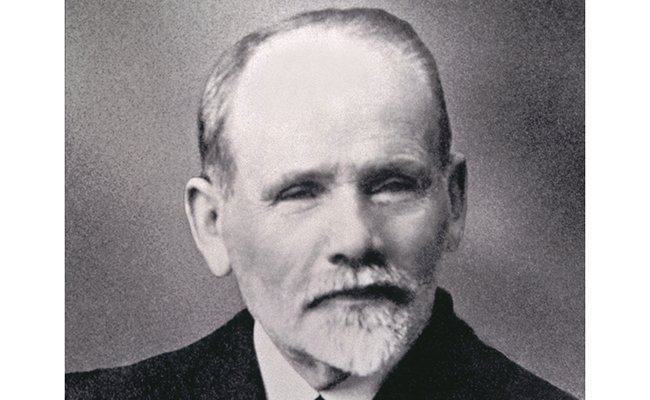
Piaget’s foundations were laid in an extremely modest setting. In 1874, at just 19 years old, founder Georges-Édouard Piaget set up his first workshop in a corner of the family farm in the village of La Côte-aux-Fées in Switzerland’s Jura mountains.
The young watchmaker’s motto — “always do better than necessary” — revealed Piaget’s passion for quality and perfection even in those early years.
Georges-Édouard Piaget quickly gained a reputation for the precision movements he produced, sowing the seeds of the brand’s later success.
2. The Brand Name Came Half a Century Later:
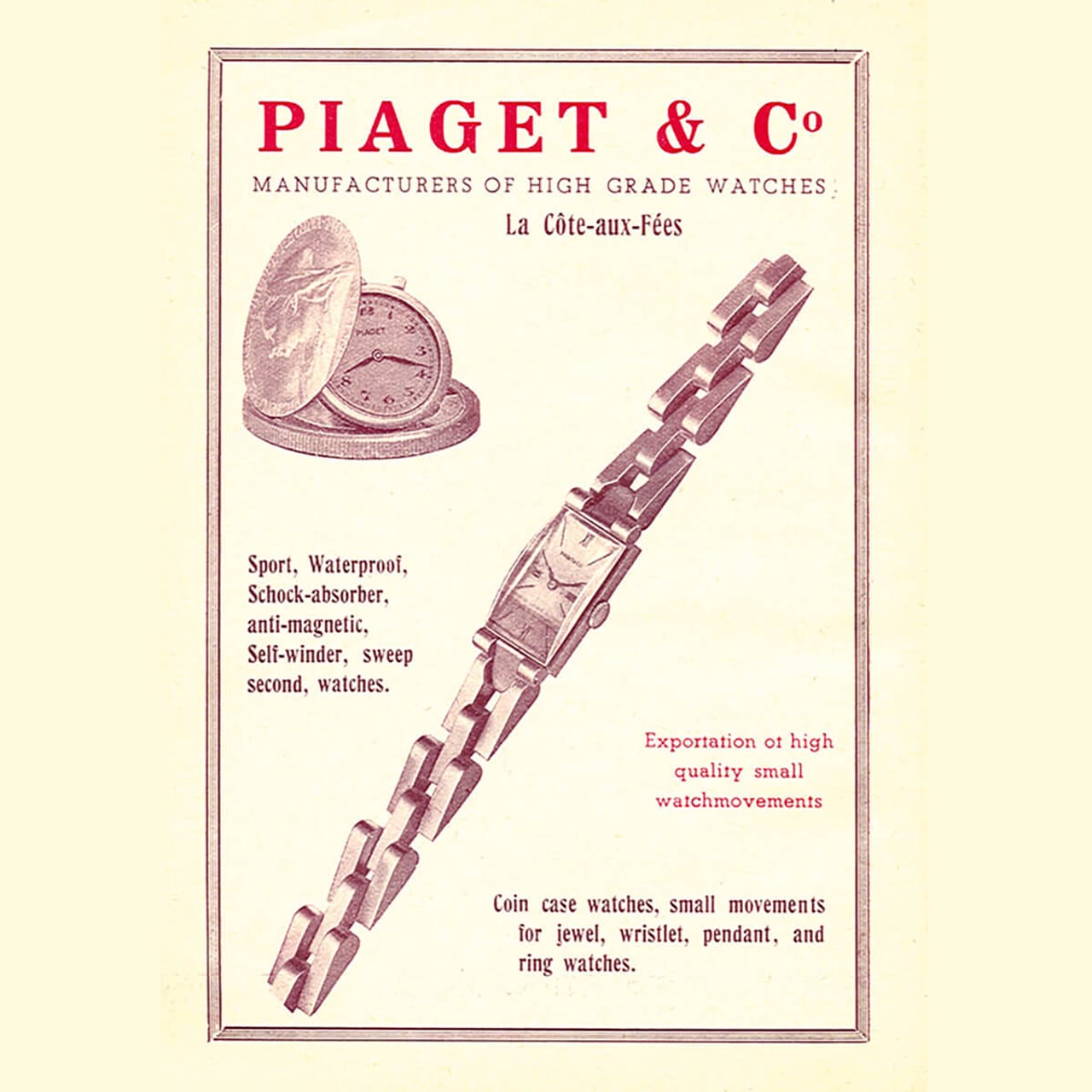
For many years Piaget did not sell watches under its own name; instead it worked as a supplier producing movements for other brands. In fact, it was only in 1943 — some 70 years after Georges-Édouard Piaget founded his workshop — that the name “Piaget” was officially registered as a brand.
With the opening of a new production facility in La Côte-aux-Fées in 1945, Gérald and Valentin Piaget, the third generation of the family business, began producing watches under their own brand.
This late start meant that, after years in the shadows “quietly” producing some of Switzerland’s finest movements, Piaget made an ambitious entrance onto the stage.
3. A Master of Both Watches and Jewellery:
In the luxury watch industry, brands usually stand out either for their mastery of movements or for their jewellery craftsmanship — specialising in both is rare.
Piaget is one of those rare exceptions.
Though it is not widely known, Piaget is among the industry leaders not only for its high-jewellery watches but also as a “manufacture” that designs and produces its own movements.
For decades the brand has designed extremely complex and thin watch calibres while also expertly producing its own cases, bracelets and gem-setting in-house. This dual expertise has given Piaget a unique position as “the jeweller of watchmaking”.
4. Records in Ultra-Thin Movements:
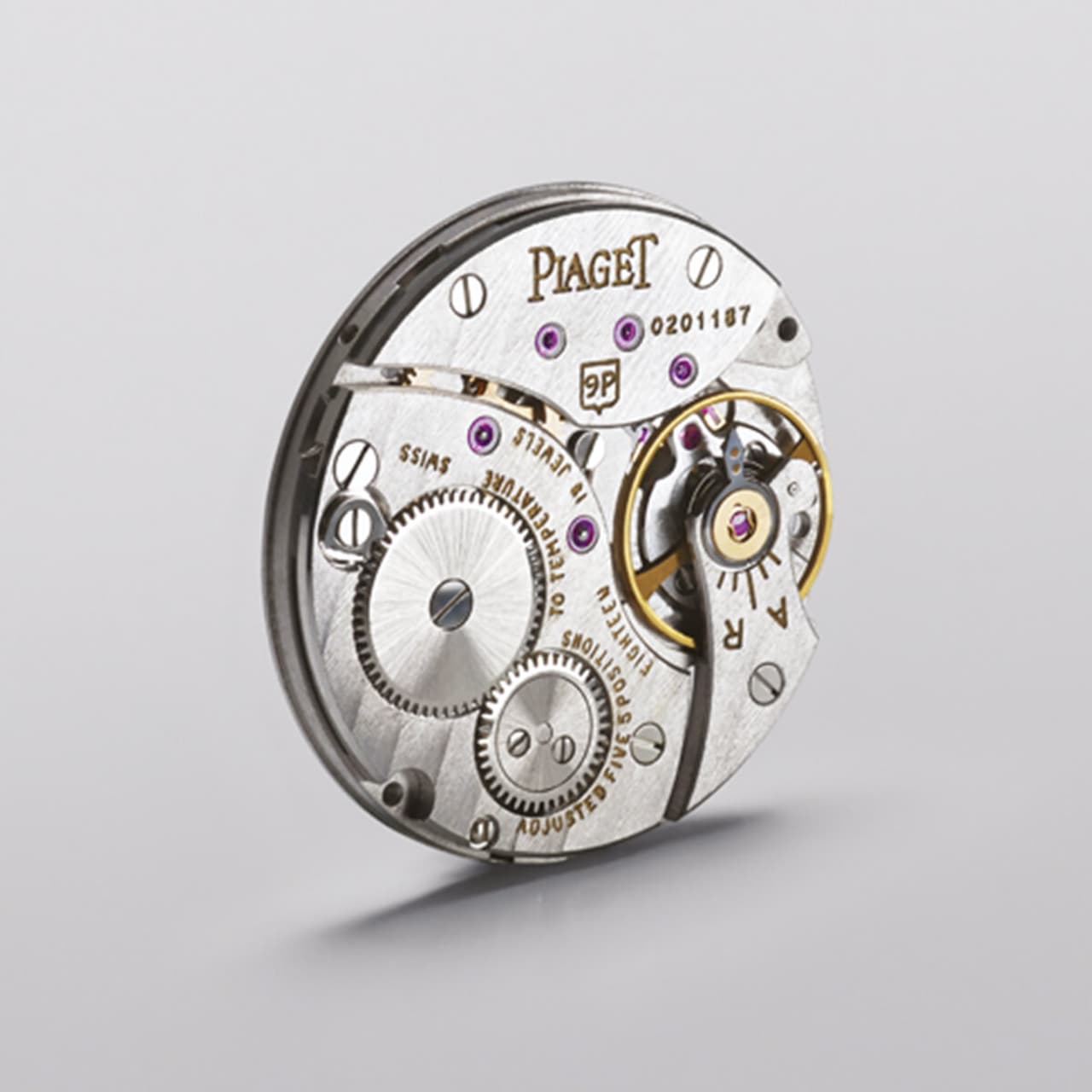
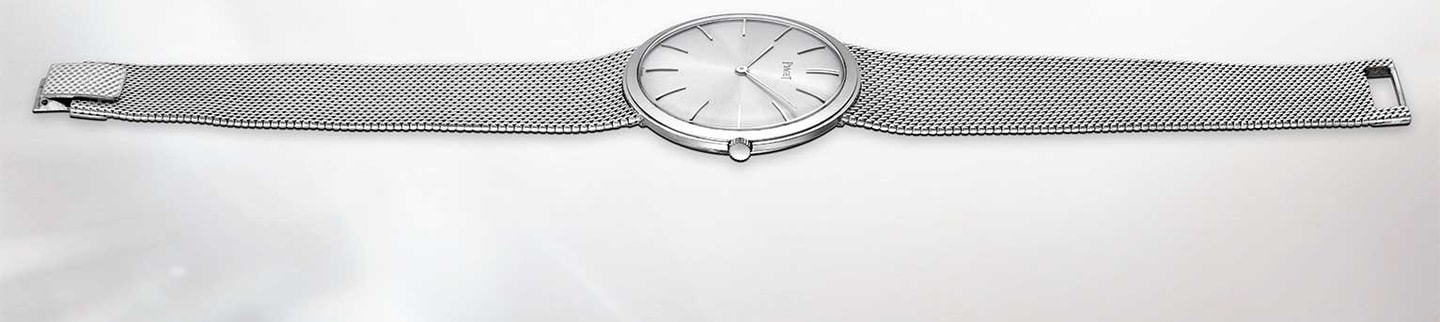
Piaget turned the concept of thinness in watch engineering into an art form. Introduced in 1957, the legendary Calibre 9P caused a sensation at the Basel Fair as the thinnest hand-wound movement of its time, at just 2 mm thick.
It was followed in 1960 by the Calibre 12P, which, at 2.3 mm thick and with its micro-rotor design, earned the title of the world’s thinnest automatic movement.
Thanks to these ultra-thin calibres, Piaget gained an unrivalled reputation for elegant, slim watches — so much so that for years the name Piaget became almost synonymous with the “thin watch”. The brand continued this legacy with the Altiplano series and in the 2010s even challenged its own records with millimetre-thin models (e.g. the Altiplano 900P and the Altiplano Ultimate concept).
5. “The House of Gold” — The Brand That Avoided Steel:
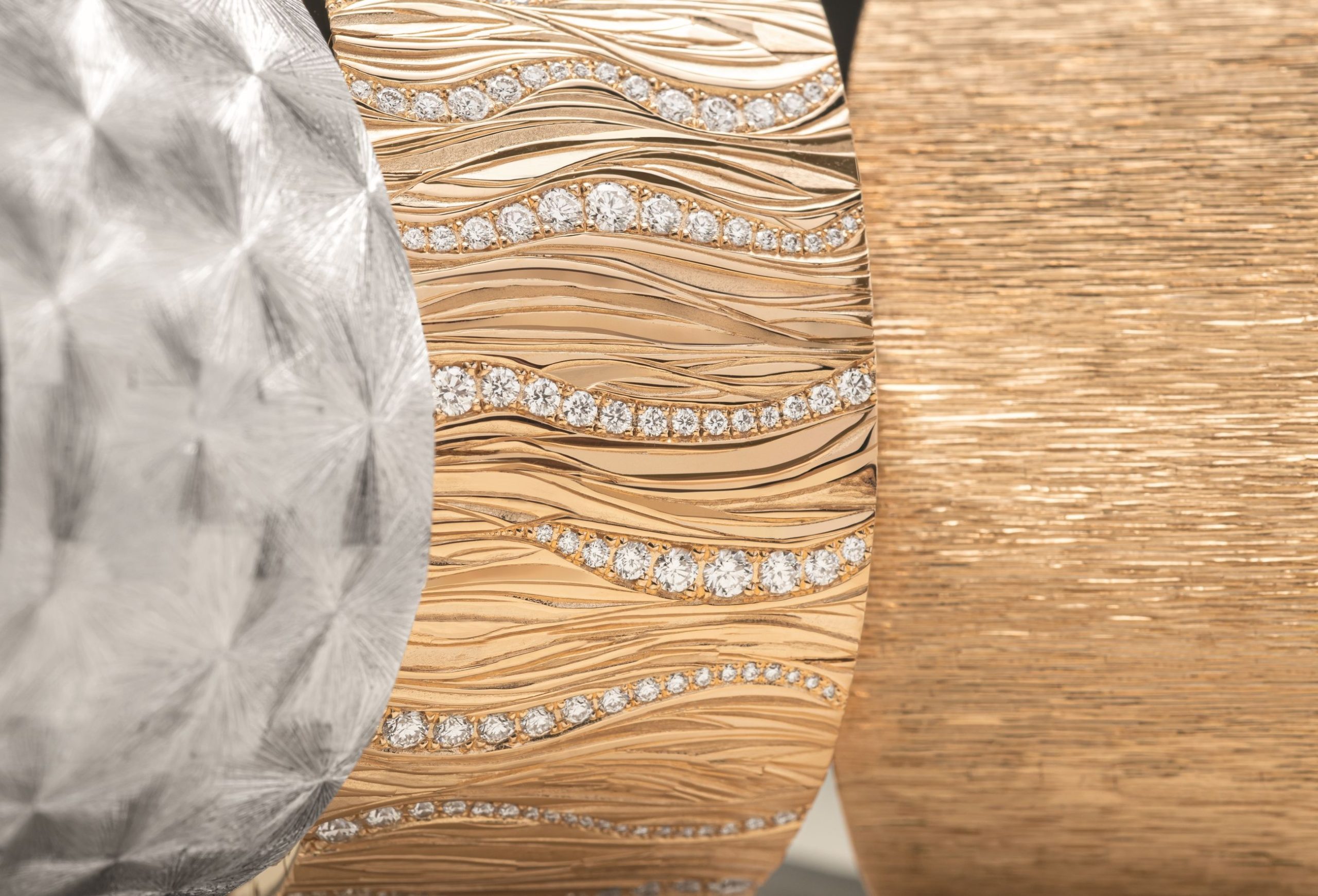
Piaget also took an unconventional path in the materials it used. From the second half of the 20th century, the brand chose only precious metals (gold or platinum) for its watch cases and bracelets and, for a time, made no stainless steel watches at all.
In fact, Piaget’s first steel watch came only with the Polo S model, introduced in 2016.
This strategy earned Piaget the title of “The House of Gold” (Maison de l’Or) in the industry.
Gold craftsmanship is so central to the brand that it has its own gold foundry in Geneva, where it melts and works precious metals itself.
Even today, only a handful of manufacturers carry out gold casting in-house in such an integrated way. Piaget’s mastery of gold also shows in the distinctive textures and engraving techniques it applies to its cases and bracelets (such as the micro-guilloché pattern known as “Decor Palace”).
6. The Splendour of Stone Dials:
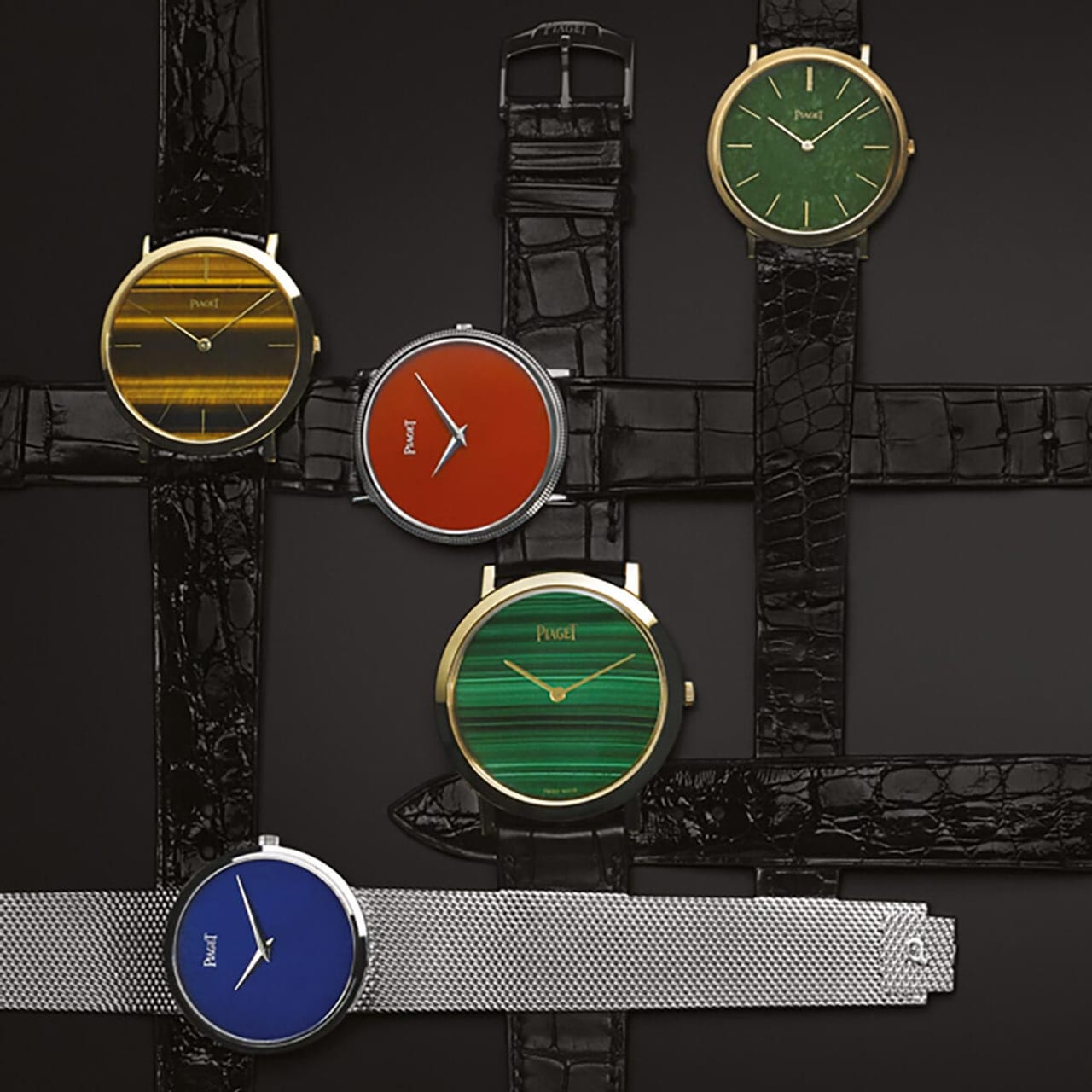
In the 1960s Piaget took groundbreaking creative steps in watch design. In a way that was unheard of at the time, it adorned its dials with plates cut from colourful hardstones.
The first “stone dial” collection, launched in 1963, featured dials made from semi-precious stones such as lapis lazuli (blue), jade (green), opal (white), malachite (green) and tiger’s eye (brown).
These vibrant, flamboyant designs reached their peak with the “21st Century Collection”, created under the leadership of Valentin Piaget, who was guided by the philosophy “Do what has never been done before”.
These unconventional watches became icons of the era, adorning the wrists of famous figures such as Jacqueline Kennedy Onassis, Elizabeth Taylor and Sophia Loren. By stepping outside classic Swiss watchmaking with young, free-spirited designs, Piaget managed to keep its finger on the pulse of the jet set and the fashion world.
7. A Surrealist Collaboration with Salvador Dalí:
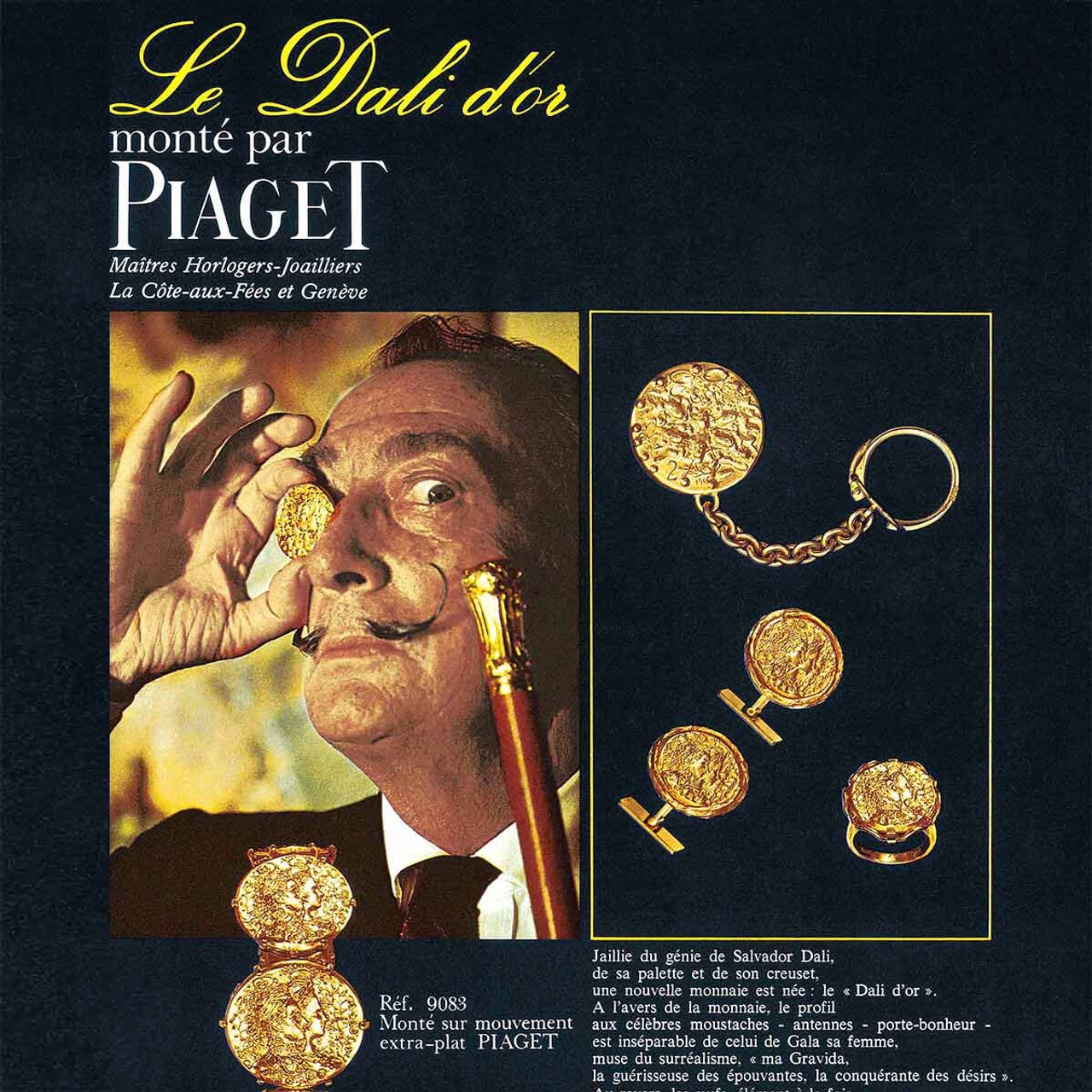
One of the early examples of Piaget’s unique bond with the art world was its collaboration with the legendary surrealist Salvador Dalí. In the 1960s, Yves Piaget, a visionary close to artistic circles, wanted to position the brand’s creative designs as works of art. To this end, a joint collection with Salvador Dalí was launched in 1967.
The gold “Dalí d’Or” medallions designed by Dalí were combined by Piaget with ultra-thin watch movements and transformed into unique watches and pieces of jewellery.
At the launch at the Hotel Meurice in Paris, the Dalí d’Or collection was presented at a lavish event attended by Salvador Dalí himself; Dalí even staged his own art by sitting on a transparent throne in the hall, as if floating in mid-air.
This unusual collection was also a nod to the “coin watch” tradition that had been popular in the 1950s. Bringing surrealism and watchmaking together, the move was one of the most striking examples of the brand’s openness to artistic innovation.
8. The Piaget Society and Famous Clients:
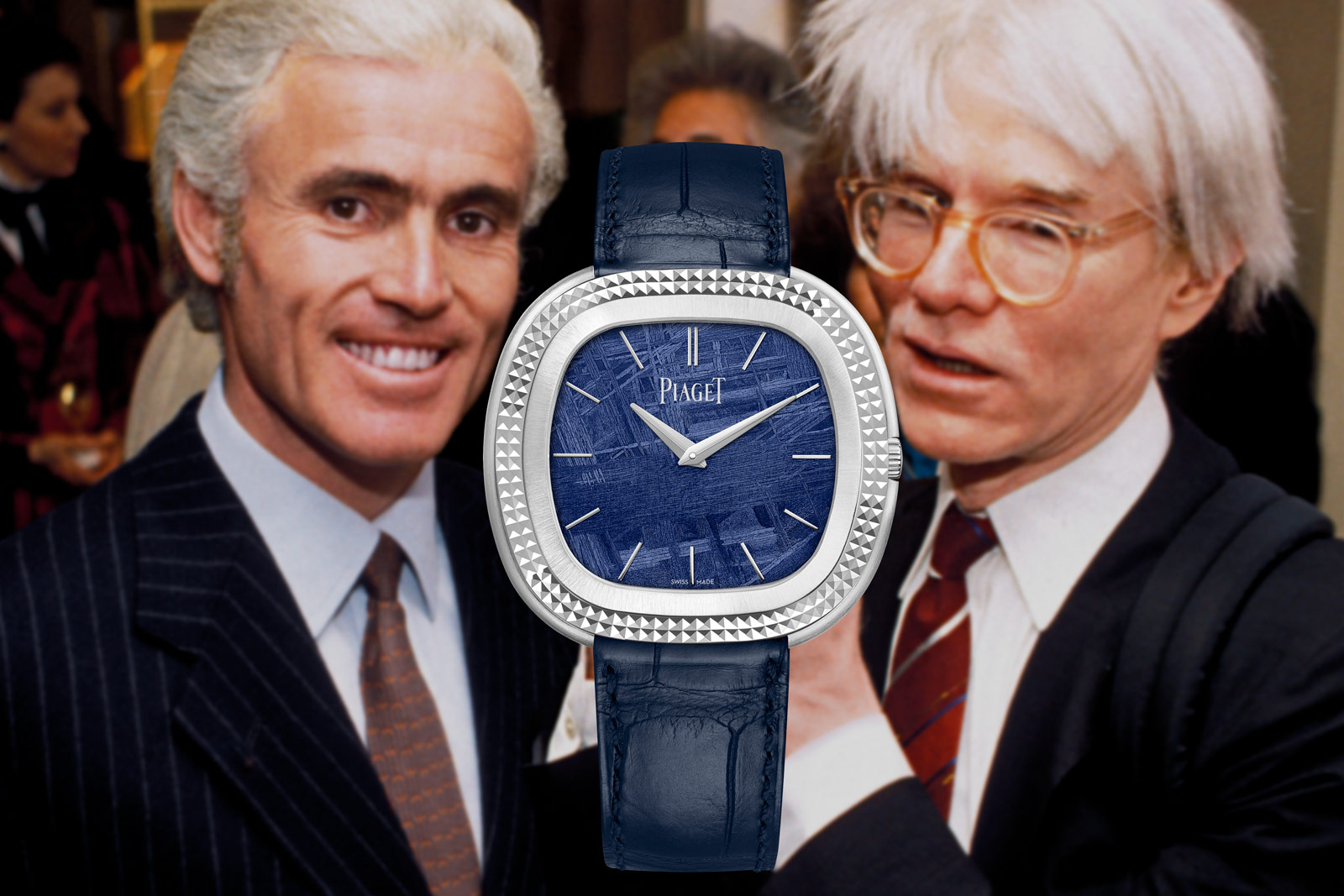
Especially in the 1970s, the Piaget brand adopted an image closely intertwined with high society and show business. Under the fourth-generation representative Yves Piaget, the brand created an exclusive circle known as the “Piaget Society”, hosting jet-set parties that stretched from New York’s famous Studio 54 club to Palm Beach.
During this period, Piaget watches became one of the symbols of splendour of American high society. Andy Warhol, Jacqueline Kennedy Onassis, Miles Davis and Elvis Presley are just a few of the pop-culture icons who chose to wear Piaget.
The pop-art artist Andy Warhol in particular was known for his closeness to the brand. A friend of Piaget and one of the key members of the Piaget Society, Warhol had no fewer than seven Piaget watches in his collection.
The wide-cased gold watch with a Beta-21 movement that Warhol loved to wear became so famous that, years later, Piaget relaunched the model under the name “Andy Warhol”. The Piaget Society concept created a centre of attraction around the brand, bringing together artists, actors, musicians and aristocrats, and Piaget became part of the glamorous lifestyle of the era.
9. Sporting Elegance with the “Polo”:
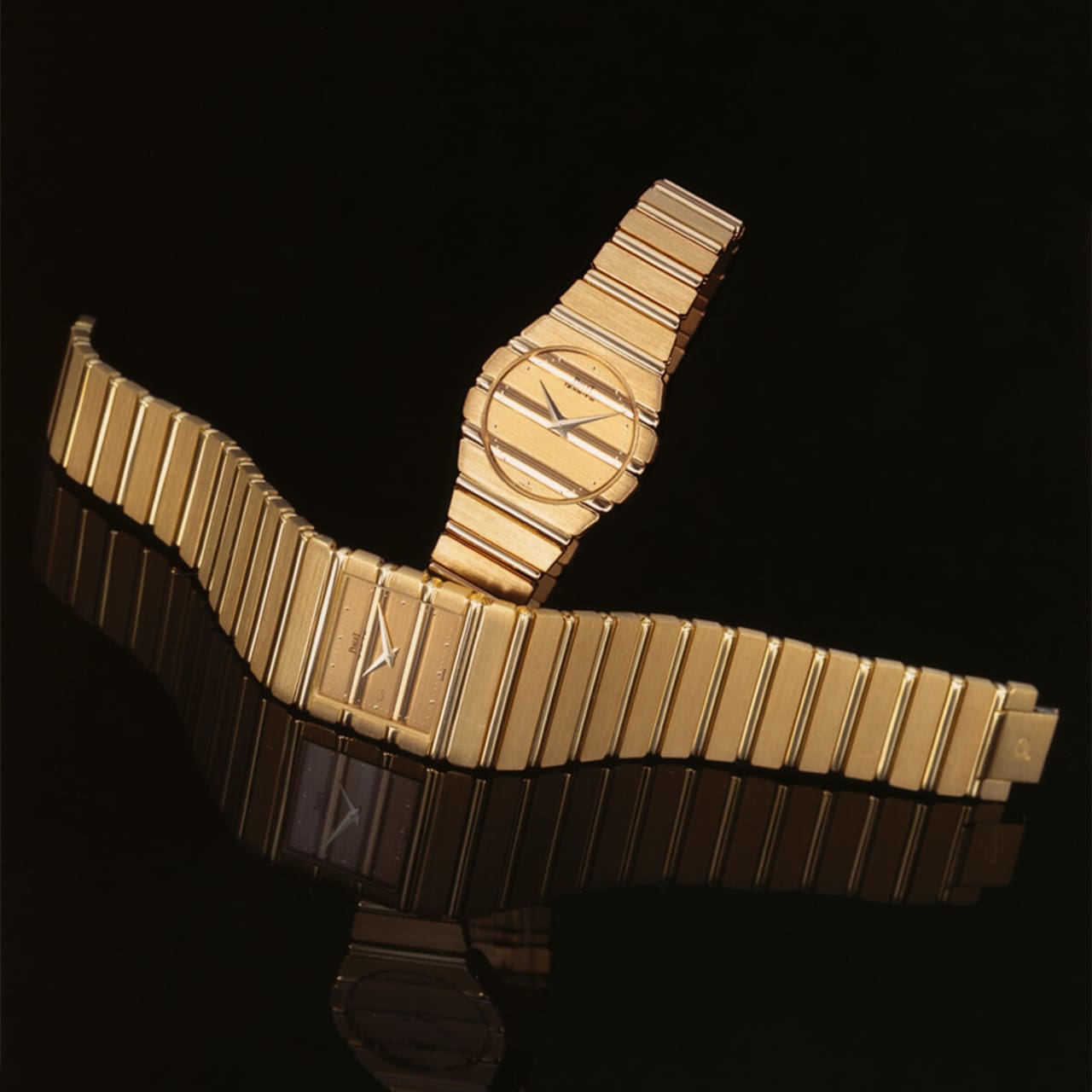
1979 saw the birth of Piaget’s first sports model. To help the brand succeed in the American market in particular, then-President Yves Piaget designed an elegant yet sporty watch inspired by the sport of polo. Made entirely of 18-carat gold, the Piaget Polo was a bold design with a seamlessly integrated case and bracelet and original lines somewhere between round and square.
Reflecting the high-octane jet-set lifestyle, the Polo had unisex appeal, with separate versions for men and women.
To support the model’s launch, Piaget sponsored the Palm Beach Polo World Cup, highlighting the link between the watch and polo, the sport of kings. The Piaget Polo soon became one of the status symbols of international high society — practically the badge of “Piaget Society” members. Updated several times over the years, this legendary model still holds an important place in the brand’s heritage today.
10. Yves Piaget and His Passion for Roses:
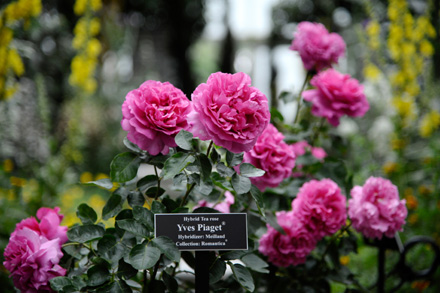
Roses are another of the Piaget brand’s sources of inspiration. Yves Piaget, the brand’s fourth-generation leader, had a special fondness for roses since childhood. This passion led him to become a jury member of the Geneva International New Rose Competition in 1976. For the competition’s first prize, Yves Piaget had a rose statuette made of pure gold in the Piaget workshops, uniting his love of flowers with his profession.
In the 1982 competition, a magnificent pink, intensely fragrant rose variety with 80 petals won first prize and was named the “Yves Piaget Rose” in honour of the jury member. As this variety gained worldwide fame, it also became a lasting symbol of the Piaget brand.
Indeed, in 2012, to mark the 30th anniversary of the Yves Piaget Rose, a special jewellery collection called Piaget Rose was launched.
With this collection, inspired by the legendary Yves Piaget Rose, and by sponsoring events such as the annual Rose Ball at the New York Botanical Garden, Piaget made the rose theme part of its brand identity. Brand representatives, who describe the rose motif as something of a talisman for Piaget, display great craftsmanship to give each rose-shaped jewel the volume and radiance of a real flower.
The Piaget rose lives on as an unfading source of inspiration in its watches and jewellery.