
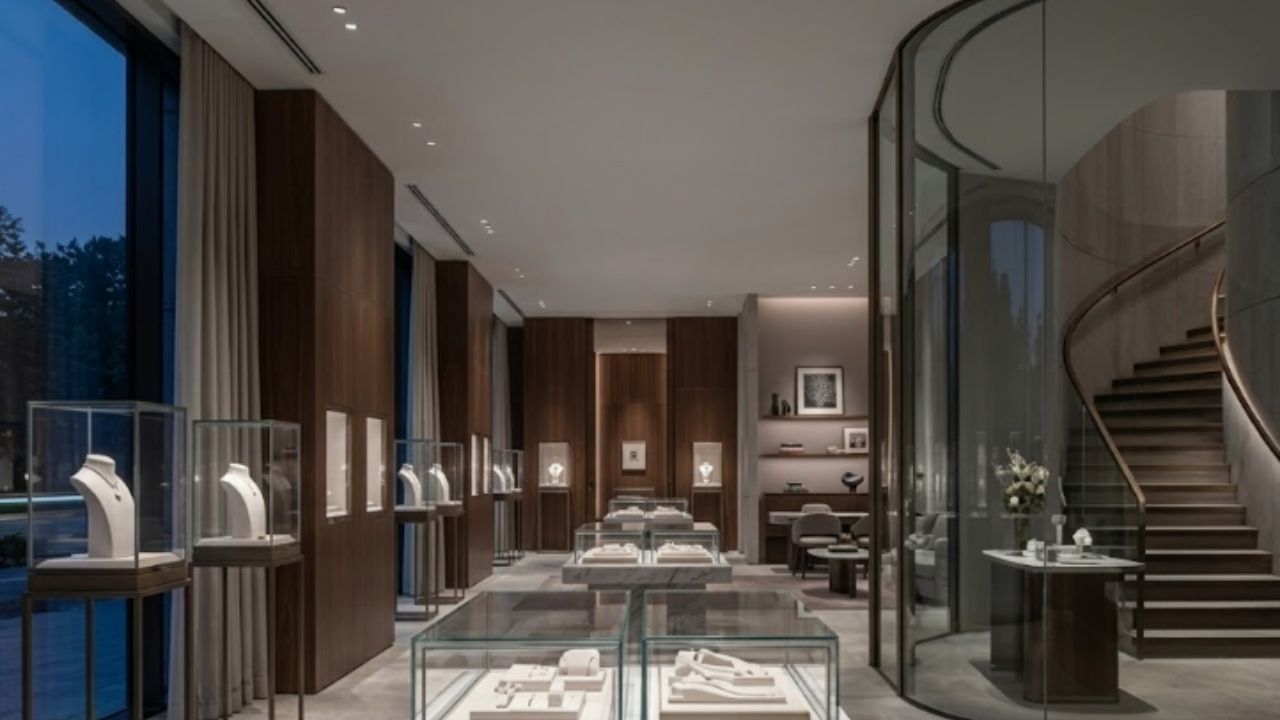
When we enter a luxury store, the first thing we usually look at is the product. The handbag in the window, the jewellery sparkling under the light, a carefully placed watch or an iconic piece displayed alone on a wall… Yet whether the client is aware of it or not, their relationship with the store does not begin solely with the product they see.
The weight of the door, the silence on entering, the feel of the floor, the scent of the space, the consultant’s tone of voice, the empty space in the window, the way the product is brought out, the texture of the armchair, the cup in which coffee is served… All of these leave small but powerful impressions of the brand in the client’s mind.
In luxury retail, the store is no longer simply a place where sales are made. In fact, in a well-designed luxury store, the sale is often the natural outcome at the end of the experience. What truly matters is how the client feels. Do they feel rushed, or hosted? Are they looking at a product, or are they being invited into a world?
Competition in today’s luxury sector cannot be explained by product quality, brand heritage or price level alone. Mastery, materials, heritage, rarity and craftsmanship certainly remain the backbone of luxury. However, the bond with the client is increasingly shaped by the experience lived inside the store.
This is why luxury store design is no longer a matter of decoration. It is a strategic matter concerning what a brand makes the client feel.
The Store Is No Longer a Sales Floor, but a Brand Stage.
In conventional retail, the store’s role is clearer:
To display the product, guide the customer, make the price visible and complete the sale. Shelf layout, inventory management, promotional space and planning designed to prompt quick decisions are at the heart of this approach.
In luxury retail, the store means something different. The aim is not merely to show the product, but to create an atmosphere around it. A luxury client does not simply buy a product; along with it, they buy an identity, a story, a sense of belonging and sometimes a private moment of their own.
Dior’s 30 Avenue Montaigne address in Paris is a powerful example of this transformation. It is not just a boutique; it is a Dior universe in which fashion, jewellery, beauty, gastronomy and brand heritage come together under one roof. The brand’s official description shows that 30 Montaigne houses a range of experience spaces, from womenswear and menswear to Dior Maison, from Fine Jewellery collections to the Dior Beauty Room and Le Jardin by Yannick Alléno. In other words, the client does not just shop; they move through the Dior world, sit, taste, look, feel and spend time.
This approach sums up very well where luxury retail has arrived. A luxury store is no longer a calculation of square metres; it is the design of a memory.
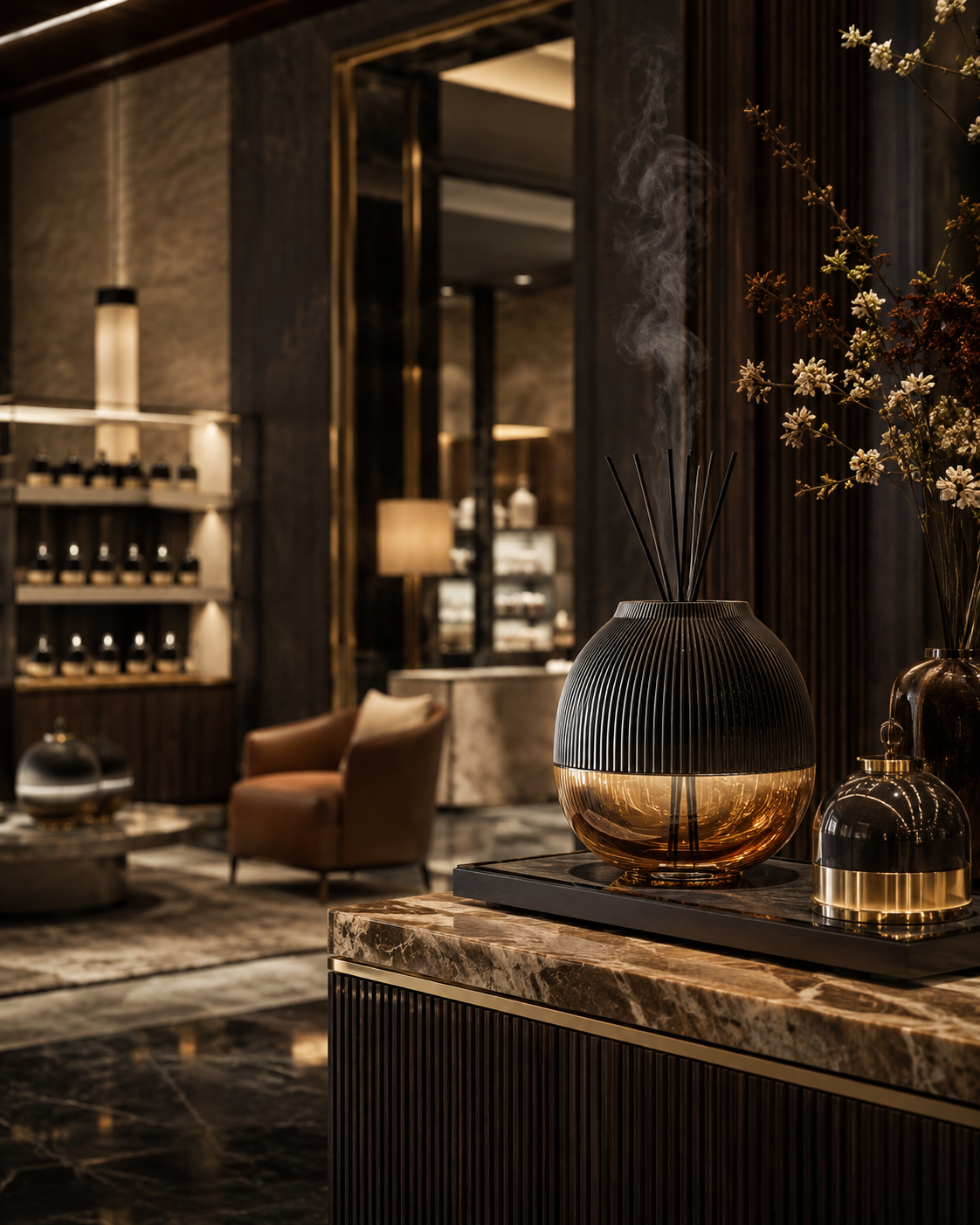
What Is Multisensory Retail?
Multisensory retail is the deliberate design of the store experience through the senses of sight, hearing, smell, touch and taste. What matters here, however, is not spraying a pleasant scent, playing agreeable music or using expensive materials. The point is for all these details to form a whole that is consistent with the brand’s identity.
The scent of leather in a Hermès store is not merely a scent; it is an atmospheric element that recalls equestrian heritage, craftsmanship and handwork. The language of black, white, beige and mirrors in a Chanel boutique is not simply a decorative choice; it is a visual code that opens onto the world of Gabrielle Chanel. Chanel’s 31 Rue Cambon boutique is still positioned today as a “personal invitation” into the brand’s world; the brand describes the experience there as a personalised welcome accompanied by an advisor and an entry into the world of Chanel.
For luxury brands, the senses cannot be left to chance. Which lighting is used, which music is played, which scent is perceived, which surfaces the client touches and what is offered as hospitality must all be considered in line with the brand’s character.
In a luxury store, every detail speaks. Some loudly, some in a whisper.
Visual Experience: Light, Space and the Language of the Window
In luxury stores, the visual experience is not designed merely to look beautiful. Light, space, colour, windows, staircases, tables, walls and product placement directly influence the client’s perception.
In a jewellery store, light can determine a stone’s fate. Under the wrong light, even an extraordinary diamond can look ordinary. The right light reveals the stone’s cut, clarity and fire. In watch stores, the reflection of the glass, the lustre of the metal and the legibility of the dial are also matters of light. In fashion stores, the colour, texture and drape of a fabric take on an entirely different value under the right light.
Space also matters in luxury. Filling every corner with product may not convey a sense of richness. On the contrary, the space left around certain products elevates their value. A Cartier bracelet, a Van Cleef & Arpels necklace or a Patek Philippe watch should be displayed not in a crowd but in its own space. A luxury product sometimes speaks loudest through the silence around it.
The blending of architecture, art and retail in some of Louis Vuitton’s store projects is another example of this approach. Louis Vuitton Maison Seoul was designed by Frank Gehry and Peter Marino; with its curved glass façade and architectural language, it has transformed the store from a sales space into a brand landmark. The window is the first sentence of this story. A good window does not tell the client “there are products inside”; it says “there is a world inside”.
Tactile Experience: Luxury Begins at the Fingertips
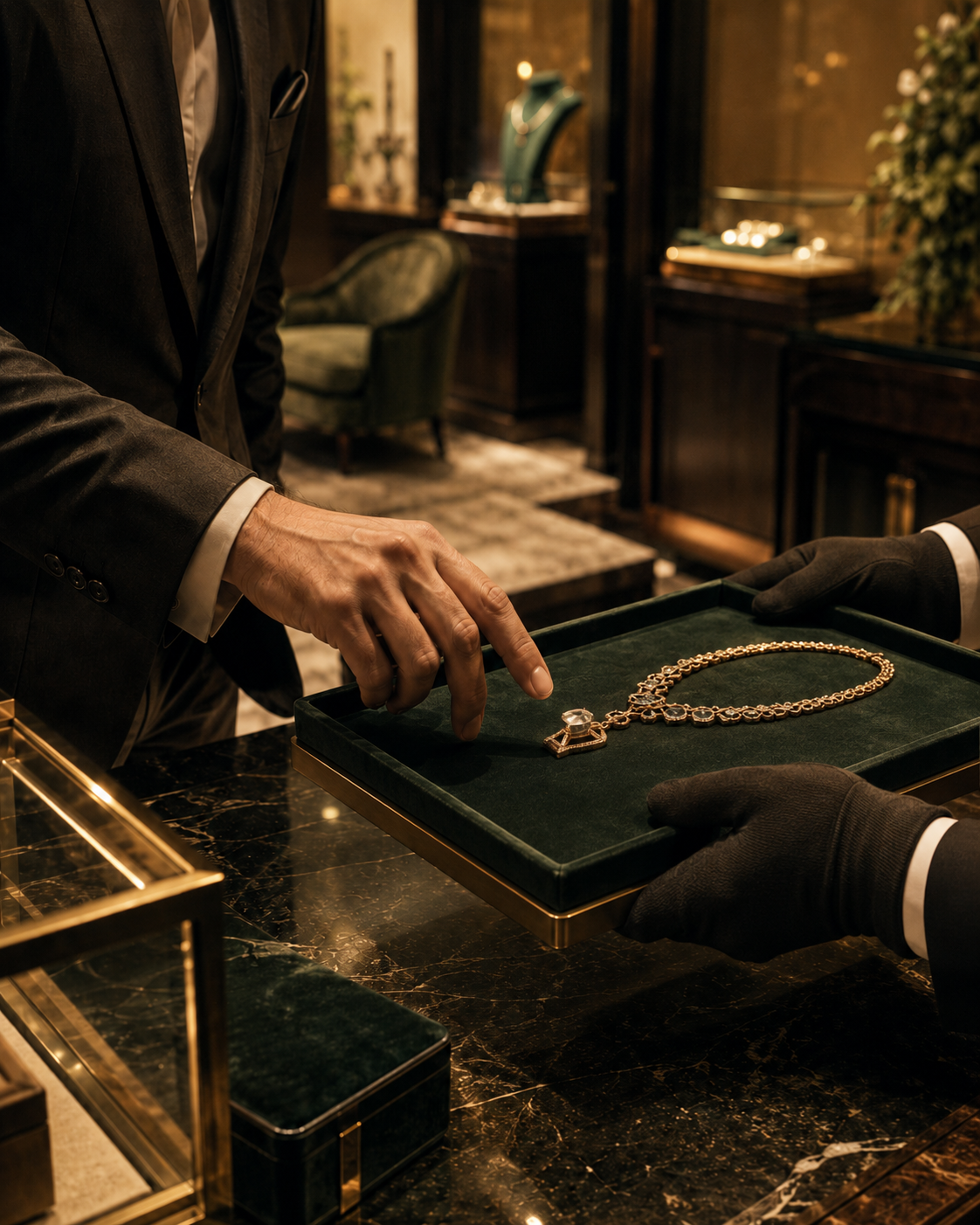
Before touching the product, the luxury client touches the brand many times. They touch the door handle. They sit in the armchair. They look at the presentation tray. They pick up the catalogue. They feel the texture of the box. They hold a cup. They feel a fabric between their fingers.
All these points of contact shape the client’s view of the brand’s standard.
For this reason, the choice of materials in luxury stores is not merely an architectural decision. Leather, marble, silk, velvet, brass, wood, glass, carpet and metal each convey a different message to the client. A heavy door handle can create a sense of security. A velvet-lined tray can make jewellery feel more ceremonial. The opening of a quality box can be as memorable as the product itself.
In the world of Hermès, leather is not just a material. It is the brand’s memory of craftsmanship. What makes a Kelly or Birkin bag valuable is not only its design or price. It is the hand-worked leather, the finesse of the stitching, the shape of the bag and the weight the client feels on touching it. That contact conveys decades of the brand’s narrative of mastery to the client in a single moment.
In luxury store design, the tactile experience is often hidden in small details. Clients may not always know technically what constitutes quality; but they feel it.
Scent Experience: The Brand’s Signature in Memory
Scent is one of the most powerful yet most delicate areas of the luxury store experience, because scent is directly linked to memory. The right scent in a hotel lobby, inside a car, in a fashion boutique or in a jewellery store can leave a lasting impression of the brand in the client’s mind.
There is, however, an important balance to strike. A luxury scent should never impose itself. A heavy, artificial or overly intense scent that envelops the client on arrival can spoil the experience. The scent of luxury does not shout; it suggests.
The atmosphere created by leather, wood and metal in Rolls-Royce showrooms or at ultra-premium car brands such as Bentley is no coincidence. The scent inside the car, the texture of the seats, the sound of the door closing and the quality of the materials work together. The client does not just look at a car; they experience the sense of life that car carries within it.
Similarly, the use of a signature scent in luxury hotels creates the brand’s spatial memory. When guests encounter the same scent elsewhere years later, the hotel’s lobby, corridor or room may come back to mind. Luxury retail is using this power of memory increasingly deliberately.
Sound Experience: Luxury Is Sometimes Silence
In a luxury store, sound is often more powerful than décor, because sound sets the tempo of the space.
If the music is too loud, the client hurries. If the store is too noisy, the sense of privacy is lost. If the consultant speaks too quickly, the product’s value is diminished. If a box is shut abruptly, the ritual is broken. The sound of the door, footsteps, the till, the packaging… All are part of the experience.
A luxury store does not always have to be completely silent. But the character of its sound should be refined, calm and controlled. The role of music is not to fill the space but to complete the atmosphere. The consultant’s tone of voice also becomes critical here. In luxury selling, the purpose of the voice is not to pressure the client but to inspire confidence.
This is particularly notable in Cartier’s approach to its boutiques. Cartier states that it treats its boutiques not merely as commercial spaces but as “living spaces” enriched by art, culture, gastronomy, music and scent. This view shows that the luxury store is no longer just a place to display products, but a multi-layered experiential space.
In a luxury store, a consultant’s silence is sometimes as important as what they say. There are moments when the product must be allowed to make its own impression.
Taste Experience: Hospitality Is Not a Simple Gesture
Hospitality in luxury stores is often seen as a minor detail. Yet when designed correctly, it changes the tone of the relationship with the client.
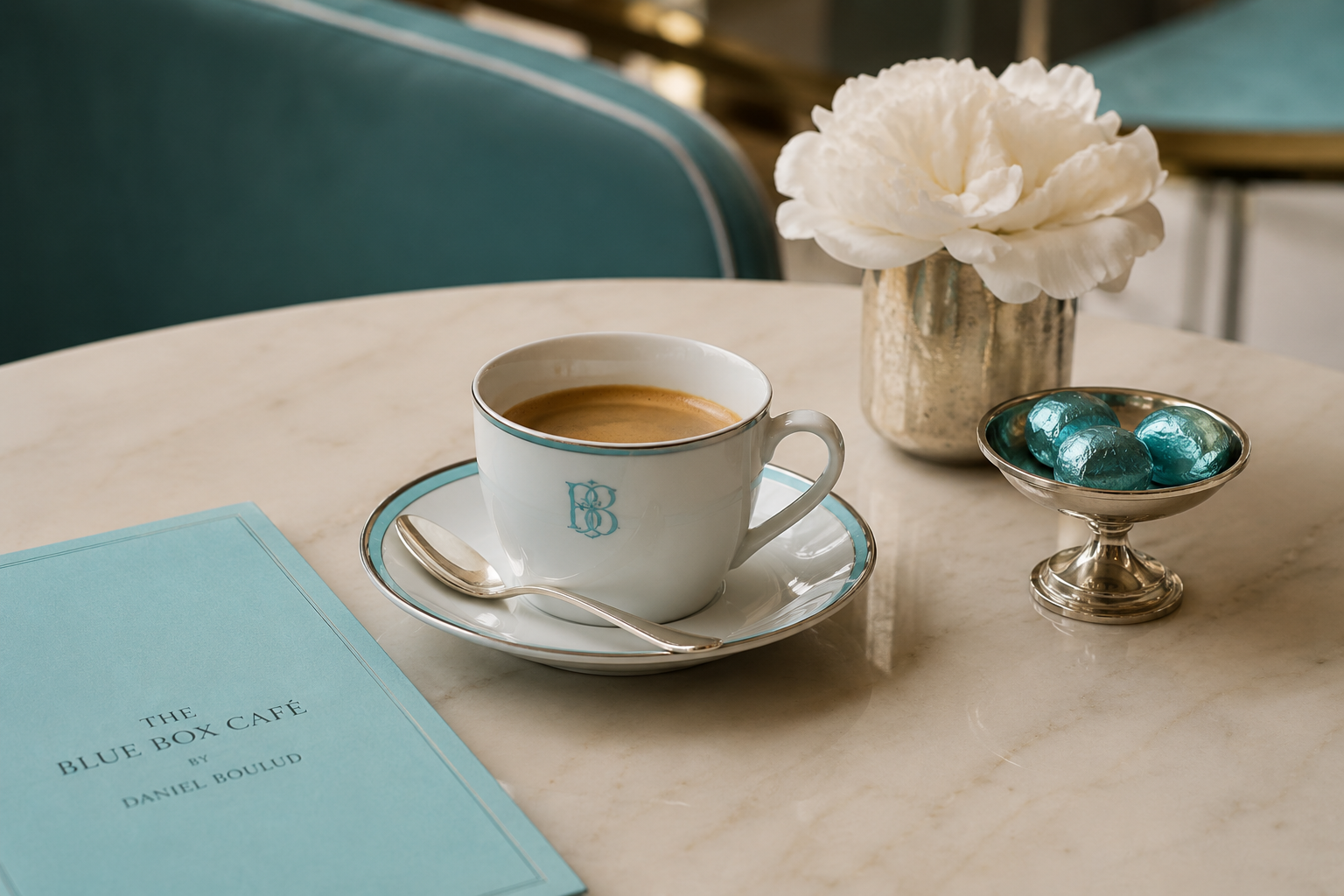
The cup in which coffee is served, the presentation of tea, the choice of chocolate, the ritual of a special drink or the elegant serving of a local delicacy makes the client feel:
“Here, I am not just a customer; I am a guest.”
Blue Box Café by Daniel Boulud, located in The Landmark on Tiffany & Co.’s Fifth Avenue in New York, is one of the best-known examples of this approach. Tiffany positions the café not simply as a place to eat and drink, but as an experience that brings the brand’s iconic blue box world together with gastronomy. With its menu, private dining experiences, private dining room and art installations, a store visit becomes more than shopping.
Dior’s Monsieur Dior restaurant and its Afternoon Tea experience likewise combine the brand’s haute couture spirit with gastronomy. Dior presents this experience under the signature of chef Yannick Alléno, with fine teas, elegant pastries and a ritual of service.
These examples show that, for luxury brands, hospitality is no longer a detail that fills waiting time; it is a means of enabling the client to form a longer and more emotional connection with the brand.
Service Ritual: The Consultant Is Not a Salesperson but a Brand Ambassador
In a luxury store, the sales consultant is not simply the person who describes the product. Clients often form their strongest bond with the brand through the consultant.
The manner of greeting, eye contact, form of address, order of product presentation, adapting to the client’s pace, use of silence, quality of questions and closing behaviour are fundamental parts of the luxury experience. The consultant should neither pressure the client nor leave them unattended. They should not be overly technical, nor remain superficial. They should not exaggerate the product, yet must convey its value.
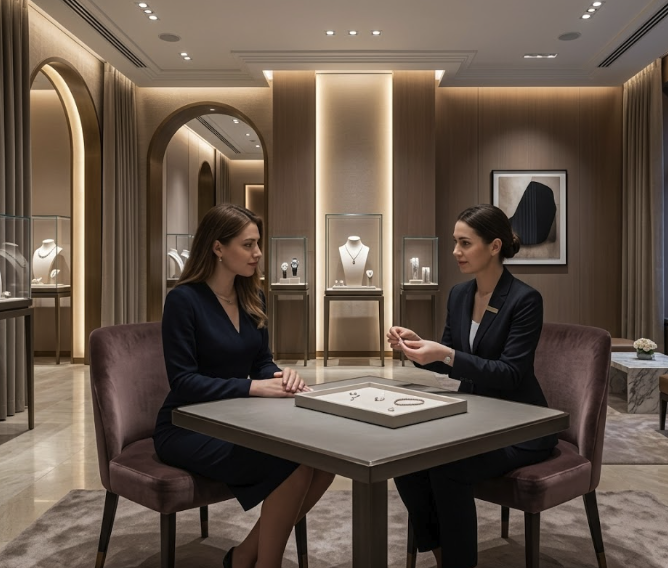
In a jewellery store, even bringing a piece out of the display case is a ritual in itself. The tray must be prepared, the piece turned towards the light, offered to the client in the right way, the client guided to the mirror, the product’s story told and the client’s reaction read.
At Van Cleef & Arpels, presenting an Alhambra necklace is not limited to information about gold, mother-of-pearl or stones; it also conveys luck, elegance, symbolism and the historical language of the Maison. At Patek Philippe, a watch is positioned not only through its mechanism but through the idea of passing it on from one generation to the next. At Rolex, the story of durability, status and achievement is carried together.
A luxury consultant is not someone who forces the sale; they are a guide who hosts the client properly within the brand’s world.
Digitalisation: Technology Should Add Value Without Being Seen
Digitalisation is transforming luxury stores. In luxury retail, however, technology must be used with care, as overly visible technology can make a store feel cold and mechanical. Good technology makes the client’s experience easier without getting in its way.
Burberry’s Regent Street store in London is an important example. The store stood out as one of the early luxury retail examples to combine physical and digital experience. Sources state that the 44,000-square-foot store was designed with sales consultants using iPads, digital systems supporting client preferences and applications bringing the online experience into the physical space.
The critical lesson here is this:
In the luxury experience, technology should not replace human contact. It should make it more personal, more seamless and more accurate.
In a jewellery store, a CRM system can show the consultant the stones a client has previously shown interest in, their anniversary dates or their preferred style. In a fashion store, a special selection can be prepared based on the client’s size, colour and style preferences. In a car showroom, a digital configuration screen can make the process of designing one’s own car more engaging. But the best technology is the one that never makes the client think “technology is being used”. It simply makes the experience feel more elegant.
The Strategic Lesson for Luxury Brands
Multisensory store design is not an aesthetic choice. It is a strategic investment that affects brand perception, customer loyalty, average transaction value, the desire to return and word-of-mouth recommendation.
For this reason, store design should not be seen as the sole concern of the architect or the decoration team. Brand managers, CRM teams, sales managers, training teams, customer experience specialists and store operations teams should all think about it together.
A luxury experience is never created by a single detail. The lighting may be excellent, but if the consultant speaks in the wrong way, the experience is weakened. The scent may be impressive, but if product presentation is ordinary, the brand’s standing falls. Digital screens may be powerful, but if the client does not feel special, the technology loses its meaning. The hospitality may be of high quality, but if the atmosphere is hurried, the ritual is broken.
Luxury emerges when every detail speaks the same language.
The Luxury Store of the Future Will Not Be Bigger, but Deeper
The luxury stores of the future need not necessarily be bigger, brighter or more ostentatious. The real difference will lie in how consistent, profound and memorable a feeling they create for the client.
Today’s luxury client wants to see the product; but seeing alone is no longer enough. They want to touch the product, hear its story, sense the scent of the space, examine it under the right light, be hosted with personal attention and spend time in the brand’s world.
Dior’s 30 Montaigne, Tiffany’s Blue Box Café, Cartier’s concept of the living boutique, Chanel’s heritage at 31 Rue Cambon, Burberry’s effort to combine physical and digital experience, and Louis Vuitton’s Maison approach extending into architecture and gastronomy all show us the same thing: a luxury store is no longer just a point of sale. It is an experiential space in which brand identity is translated into place, the senses and memory.
Because luxury is no longer only something that is seen.
It is a surface that is touched.
A silence that is heard.
A scent that is remembered.
A small gesture of hospitality that is tasted.
And above all, it is the feeling the client takes with them after leaving the store.


