
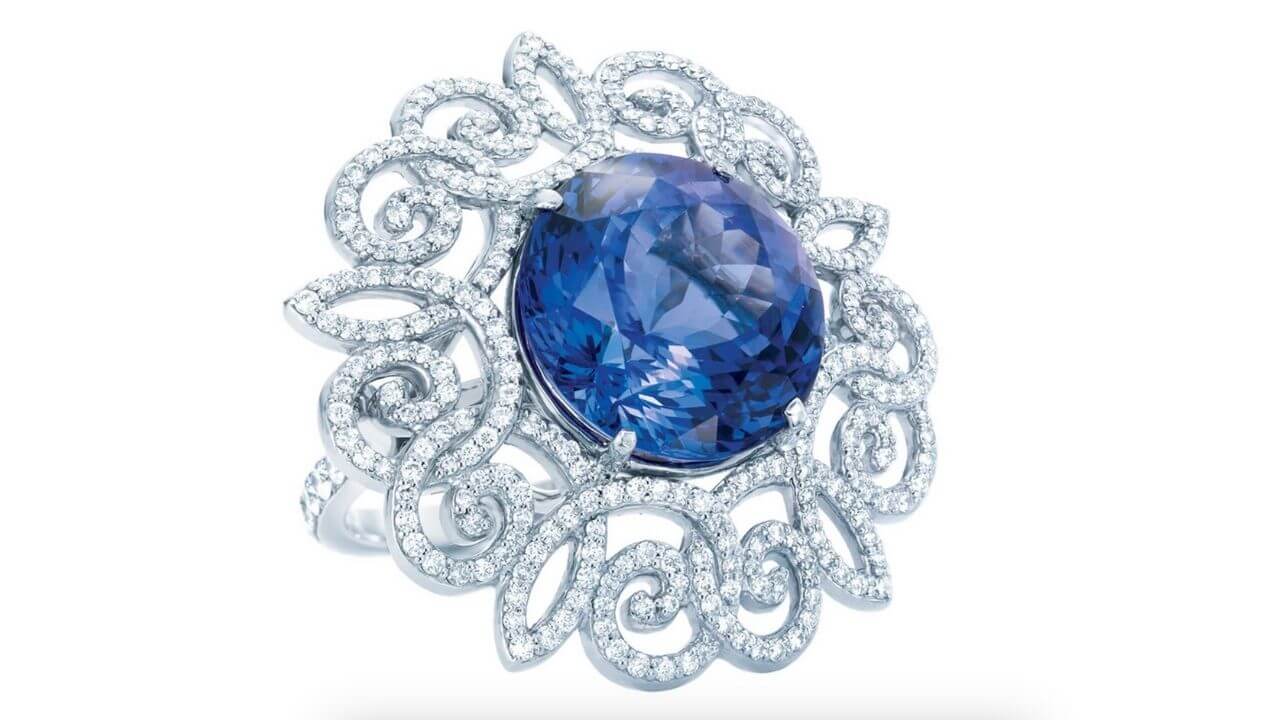
Between 2001 and 2005 I lived in Cancún, Playa del Carmen and on the island of Cozumel in Mexico, and worked for brands in the jewellery industry. It was during those years that I first encountered tanzanite — at a time when it was virtually unheard of in Türkiye. In 2005 I returned to Türkiye and started working again for a prestigious brand in the jewellery sector. When I asked, “We’re selling tanzanite like crazy in Mexico — why don’t we have it?“, people asked me what it was. It simply wasn’t known yet.
And in those years, with the marketing strategy that “within the next 20 years the mines will be flooded and tanzanite will become extremely valuable..“, it was selling like hot cakes, especially to Americans.
Let me briefly touch on the history of this precious stone and some important developments..
There are several theories about who really discovered tanzanite first. The most popular is the story of Manuel De Souza. According to legend, however, the gem was actually first discovered by local Maasai cattle herders after a fire. The fire turned brown zoisite crystals into deep blue-violet gemstones.
The Maasai tribe lives in the part of Tanzania where tanzanite is mined. The people of this tribe associate tanzanite with producing calm and compassion. The gem is also believed to help in the creation of new life. These associations are thought to stem from the tribe’s ideas about the colour blue, and its beliefs about blue are linked to tanzanite because of its deep blue colour.

This precious stone is also known to have been created millions of years ago by the same tectonic shift that formed Mount Kilimanjaro and Tanzania’s Great Rift Valley. This once-in-a-lifetime natural event makes tanzanite one of the most sought-after gemstones in the world. Some geologists call it a “one-generation gemstone”, theorising that with continued mining there will be no natural tanzanite left within the next decade.
Tanzanite is a relatively new gemstone, and it has quickly become as desirable as precious stones such as diamonds and rubies. Its striking blue colour makes the stone very attractive. It has often been worn by celebrities on the red carpet, drawing public attention to this dazzling and unusual gem. As the stone’s rarity increases day by day, tanzanite jewellery is set to become a treasured heirloom.
Some crystals, like tanzanite, have “trichroism”. This means the crystals display a perceptible difference in colour under different lights or when viewed from different angles. When tanzanite catches the light in different ways, it can appear blue, violet, red and even yellow. This unusual property makes tanzanite even more attractive to jewellers, since the finished piece will be incredibly eye-catching.

Tiffany & Co. was the first American company to use the stones in jewellery design, in 1968. Its original launch campaign advertised that tanzanite could now be found in only two places: “in Tanzania and at Tiffany’s.”
Soon afterwards, tanzanite was named the gemstone of the 20th century. Its rapid success in the jewellery industry was made possible by its vivid colour, high clarity and potential for large cut stones.
Usually blue, tanzanite can range from lighter lilac to deeper violet or blue-sapphire shades. The colour comes from small amounts of vanadium within the mineral structure (heat). When heated, the colour becomes even more vivid. Tanzanite can also be found in shades of purple, yellow and brown; such tones can routinely be heat-treated to turn them permanently into an exotic bluish-violet colour.
When worn as jewellery, tanzanite is believed to remain in the wearer’s auric field, raise their consciousness to a higher state and bring positive qualities to others who see its beauty. It empowers us to move forward with optimism and inspiration, gives us a sense of direction and allows us to manifest our powers for the highest good.
Although it rates only 6.5 on the Mohs hardness scale, its resistance to scratching and wear is relatively good. Even though it can be worn every day, tanzanite is a fragile stone, so take care to protect it from knocks, excessive pressure and extreme changes in temperature.
Whether you admire tanzanite for its incredible colour or for the mystical lore surrounding it, it is a beautiful reflection of the colourful treasures nature can create.

And some facts from the literature..
- Tanzanite generally contains no internal lines or flaws and has a high level of clarity, although a natural internal line may occasionally be found.
- The mining process is generally difficult and dangerous. Tanzanite deposits are found underground, and miners mostly dig with simple hand tools.
- Tanzanite mining is governed by regulations controlled by the Tanzanian government, and illegal mining activities are severely punished.
- Because it comes from a rare and limited source, tanzanite is quite valuable compared with other gemstones.
Tanzanite is sometimes compared with precious stones such as sapphire and emerald, and its value is determined by its colour, clarity and quality of cut. - Tanzanite has a colour-change property: it can display shades that shift between blue and violet under different light sources.
- Because tanzanite is a soft stone, it is sensitive to scratching and breaking, so it is important to be careful when wearing it. Care should be taken that tanzanite jewellery is not scratched or knocked while being worn.
- Tanzanite is sensitive to high temperatures, harsh chemicals and sudden temperature changes, so it is recommended to clean it with a soft brush and warm soapy water.
- Tanzanite’s colour may change if it is exposed to the sun for long periods or kept at high temperatures, so it is important to protect it from sunlight and extreme heat.


